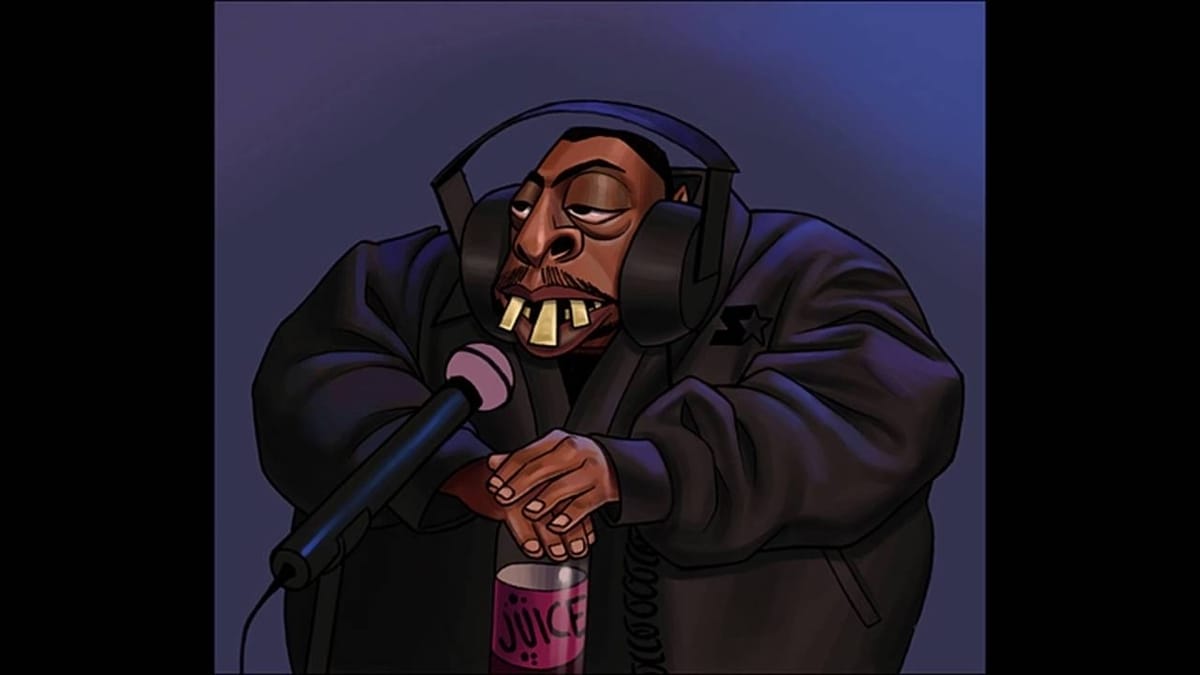

you sit alone at the heavy typewriter.
keys clacking loudly.
you finally realize the terrifying power of the thing.
if you write it right, if you bleed on the page just enough, someone is going to read it and it’s going to burrow deep into their chest.
you can completely ruin them.
you can miraculously save them.
you can alter the entire trajectory of a kid a hundred years from now who finds your moldy book in a dusty thrift store.
it’s a massive, terrifying responsibility.
heavier than holding a loaded gun to a stranger's temple.
with a gun, the bleeding is over in a second.
with a word, the bleeding lasts for generations.
i stopped typing.
looked at the beautiful ass of my girlfriend.
a fat fly was buzzing against the dirty windowpane, trying desperately to get to the streetlamp outside.
it just kept slamming its tiny head against the hard glass.
that’s humanity.
blindly slamming against the glass, driven by unseen forces they can’t even begin to comprehend.
to be the one who directs the fly.
who builds the glass.
or turns on the streetlamp.
that’s the real game.
you better make damn sure you know what you’re doing.
before you press the keys.
every belief you'd die for was installed by someone you never met. something is turning the streetlamp on and off, watching you throw yourself at the glass. this essay is about becoming the hand on the switch instead of the fly
1. what are memes?
when Richard Dawkins coined the term "meme" in 1976, he exposed the source code of human behavior.
he realized that ideas spread exactly like biological viruses. they bypass the body and infect the brain.
a meme is simply a unit of cultural transmission. it is an idea, a catchphrase, a melody, or a worldview that jumps from mind to mind.
and just like a virus, a meme has one singular objective to survive and replicate.
for a meme to outcompete other ideas and dominate a culture, it relies on three raw mechanics:
speed how fast does it spread? a catchy hook infects millions overnight. an academic paper dies in a drawer.
lifespan how long does it stick around? a tiktok trend burns out in a week. the concept of "marriage" survives for millennia.
accuracy how intact does the idea stay when passed on? if it gets butchered in transmission, it dies. if it holds its shape, it takes over.
memes are "selfish"
a meme does not give a single fuck if it is true, healthy, or good for you. it only cares if you will replicate it.
think of a terribly annoying song stuck in your head. you hate it, but you hum it out loud, infecting the person next to you. the meme won. it hijacked your hardware to spread.
this is why conspiracy theories, fake news, and outrage culture dominate the world. they hack human emotions fear, anger, disgust to guarantee transmission.
they are literally viruses of the mind.
the memeplex (the unkillable idea)
sometimes, memes realize they survive better if they form a cartel. this is called a memeplex.
a religion is a massive memeplex of rituals, moral codes, and creation stories bolted together to become unkillable. Capitalism, Marxism, or identifying as a "Democrat" or "Republican" are all memeplexes.
once an idea cartel gets installed in your head, you will protect it fiercely, ensuring the virus lives forever.
2. identity and the void
everything in life is a meme. religion, politics, philosophy, jokes, stoicism, cynicism.
the human need for meaning
memes often disguise themselves as truth because people crave certainty in the face of a chaotic universe.
humans desperately need meaning to survive, and will adopt whatever belief system even a false one to sustain themselves through the hardships of life.
religion is a big meme, a pervasive one. Christianity survived for 2 thousand years because it's catchy. you go to hell, or you go to heaven. you just have to follow these 10 commandments, the bible is the truth.
but Christianity is a meme that has evolved dramatically over thousands of years. modern Christianity is "irrecognizable" compared to 1,500 years ago.
as it travels from mind to mind, it evolves to adapt to its environment to maximize survivability. i
memes and identity
memes are deceptive. they go into someone’s mind, stay there, and envelope with your mind as you grow up.
memes become ingrained in people from a young age and evolve internally, becoming indistinguishable from one's own beliefs and identity.
because people believe their memes are themselves, they will fight and even die defending them, regardless of whether those memes are true or false.
the danger of unexamined beliefs
every opinion, outrage, and worldview most people hold was "given to them on a silver platter" inherited from others who were also never taught to think independently.
entire frameworks of reality could be wrong if the source beliefs were flawed.
we like to think we control our ideas. but memetics suggests that ideas control us.
our brains are just the biological hardware, and memes are the software constantly competing to get installed in our heads.
3. memes over muscle
the most powerful force in the universe, surpassing physical force, is the meme.
in the Stone Age, power came from physical dominance; in the modern world, power comes from controlling ideas.
true power lies in being a creator and spreader of memes installing ideas in others' minds so effectively that those people act on them as if the ideas were their own.
this is the foundation of persuasion, sales, and influence.
the world's greatest "memers"
the most influential figures in history are essentially great memers Christ, Gandhi, Martin Luther King, JFK, Andrew Tate, Jordan Peterson, Elon Musk, Diogenes, Peppa Pig.
their power comes from the ability to articulate and transmit memes in a charming, charismatic way that makes others believe and adopt them.
being a great memer is the greatest skill in the universe, touching every aspect of life confidence, wealth, freedom of expression.
a great memer carries enormous responsibility. they have the power to change the next generation of humans.
memes are more dangerous than physical force. you cannot stop a great meme, because you could kill a thousand roses but you cannot stop the arrival of spring.
4. how to use it
1. ruthless articulation
any idea can be said in a paragraph.
a great memer says it in five words that lodge in your skull. "ideas spread like viruses" "you are a meme"
compression finds the sharpest possible edge. if they can't repeat it at dinner without you there, it dies.
your job is to make it repeatable without you present.
Friedrich Nietzsche "God is dead" three words. in three words, he articulated the massive, complex collapse of objective moral frameworks and religion during the Enlightenment. he didn't need a 500 page thesis. he just dropped a sniper bullet that we are still talking about a century later.
JFK "Ask not what your country can do for you ask what you can do for your country" he inverted the entire psychology of a generation in a single, perfectly balanced sentence. that is ruthless articulation.
you can have the most profound insight in human history, but if it takes you ten minutes of rambling to explain it, the meme is dead on arrival.
ruthless articulation means murdering your darlings. it means stripping away every weak adjective, every academic caveat, every piece of cowardly nuance.
you find the absolute bedrock of the idea and distill it. a great memer boils a lifetime of struggle into a single sentence that someone else can't get out of their head for the rest of their life.
you are performing surgery on their brain.
if you want the idea to survive the jump from your mind to theirs, the words have to be exact, sharp, and unforgettable.
2. polarization
if everyone nods and agrees with your idea, it’s sterile. it has no velocity and will die quietly in a corner.
a great meme draws a hard line in the sand and forces people to pick a side.
when you create a meme that pisses a specific group of people off, you are hacking their nervous system.
the people who hate it will screenshot it, write angry essays about it, and share it with their own followers just to mock it.
they become your unpaid marketing department.
outrage has the highest transmission rate of any human emotion. you want the friction. friction creates heat, and heat makes the virus spread. you want enemies to carry your meme across borders you couldn't cross yourself.
Jordan Peterson he didn't get famous by quietly publishing clinical psychology papers. he exploded because he drew a hard line in the sand over compelled speech (pronouns in Canada) it was wildly polarizing. the haters. they protested him, screamed at him, and wrote thousands of hit pieces. the result. they handed him the biggest megaphone on the planet for free. without the people who hated him, millions of young men would have never stuck around to hear him say, "clean your damn room"
"make America great again" it is a perfectly polarizing meme. you either wear the red hat or you violently hate the red hat. there is no middle ground. the people who hate it share the image constantly just to mock it.
every meme that spreads hard has a villain the sheep, the normies, the system, the people who "don't get it"
an enemy turns passive listeners into defenders. once someone is defending your idea against an outgroup, they own it.
they'll fight for it harder than you ever did.
3. attach it to a feeling
nobody in the history of the world has ever forwarded a spreadsheet because the numbers were elegant.
they forward what moved them the thing that made them furious, or seen, or suddenly awake.
emotion is the fuel. logic is just the thing you bolt on afterward so people feel justified in what they already felt.
this is the mistake every clever person makes: they lead with the argument, thinking if the reasoning is airtight, people will adopt it.
but airtight reasoning produces respect. it lacks transmission. people nod and move on.
what they carry is the jolt the moment their body reacted before their brain caught up. that chill of recognition. that flash of "how did i never see this"
so flip your order of operations. before you build the case, find the charge.
ask what does this idea make someone feel in their gut? if the honest answer is "nothing" you don't have a meme yet you have a fact, and facts sit in libraries untouched.
find the fear, the hope, the anger, the awe. wrap the logic around that core.
the feeling gets it in the door; the logic lets them keep it without feeling manipulated.
Andrew Tate. love him or hate him, the guy is a masterclass in this. the trojan horse. screaming about Bugattis, smoking cigars, and saying outrageous things about women. it is pure clickbait engineered for tiktok algorithms. the payload: once a lost 19 year old kid stops scrolling to watch the trainwreck, Tate opens the belly of the horse and installs a memeplex about taking extreme accountability, hitting the gym, escaping mediocrity, and building wealth.
4. give people a version of themselves they want to be
here's the deepest one. people adopt identities, and ideas ride in as passengers.
when someone "believes" something, what's really happened is that belief has become load bearing for who they think they are.
that's why you can't argue people out of positions, you are attacking a self.
the great memer hands someone a mirror that shows a better, sharper, more awake version of themselves and belief in the idea is the price to becoming that person.
"people who understand this see the world clearly" "you're not like the ones still asleep"
adopting the idea becomes an upgrade to the ego. and people will pay almost anything for that.
worldviews spread like wildfire. dry facts die.
a fact asks you to update a file. a worldview offers you a new life.
build ideas that let someone say "this is who i am now" and they won't just believe you, they'll become a missionary for you, because defending your idea is now the same thing as defending themselves.
5. tap the void (the antidote to chaos)
look around. underneath the surface, most people are terrified.
they are acutely aware that the universe is chaotic and doesn't give a fuck about them.
they are staring into a void of meaninglessness, desperate for a raft.
this is where the apex memers. the founders of religions, the great philosophers do their real work. you sell a lifeline.
the most resilient memeplexes in history (Christianity, Stoicism, whatever) survive because they give people a map to navigate the chaos.
if your meme gives a man a reason to endure his suffering, a framework for his pain, or a target to aim at, he will never let it go.
he will fight and die for your idea, because to lose your idea is to fall back into the void.
Viktor Frankl (Logotherapy) Frankl survived the Holocaust. he looked into the ultimate, darkest void of human suffering and came out with a lifeline meme "he who has a why to live for can bear almost any how" he handed a flashlight to millions of depressed, suicidal people.
Christianity it is the most successful memeplex of the last 2,000 years because it directly attacks the void. it looks at people terrified of death, disease, and meaningless suffering, and says, "there is a plan, your suffering is not in vain, and there is a paradise waiting for you if you follow these rules" it provides ultimate order against ultimate chaos.
6. say it a thousand times
amateurs say a brilliant thing once, feel the rush, and move on to the next brilliant thing, quietly resentful that the world didn't catch it.
great memers understand that a single utterance is worthless. repetition is the entire game.
you take one core idea and you say it a hundred different ways as a story, a one liner, a rant, a metaphor, a joke, a warning until it stops being "a thing you said" and becomes ambient, part of the air people breathe.
and here's the payoff, the highest victory available repeat an idea enough, across enough angles, and people forget where they heard it.
it detaches from you and floats free.
eventually someone says your idea back to you as if they invented it genuinely believing it was their own original thought.
that is total victory. the meme has fully colonized the host it's now living inside them as their belief, which means they'll defend and spread it with a conviction you could never manufacture from the outside.
so kill your fear of repeating yourself.
that fear is ego you're bored of your idea long before your audience has even heard it once.
the world isn't paying nearly as much attention as you think. say it again. say it better. say it until it's not yours anymore.
these steps are pure mechanics. the exact same six moves build a liberation movement or a cult, a genuine awakening or a grift.
the only variable that separates a great memer from a dangerous one is what they choose to make immortal.
from an absolute perspective, biology is already irrelevant. the future of human evolution is entirely memetic.
in a few generations, your DNA will be diluted into statistical noise, but a perfectly engineered idea can colonize human consciousness for millennia.
we are entering an era of absolute memetic warfare. the noise is deafening, the void is widening, and the digital landscape is optimizing for the lowest, most parasitic forms of infection.
most people will die as passive hosts, running software written by people who wanted to exploit them.
the only compelling move left is to become the architect of the simulation.
you write the operating system for the next epoch of human consciousness. you engineer the ideas that future generations will mistake for their own souls.
you are a meme. decide what survives.